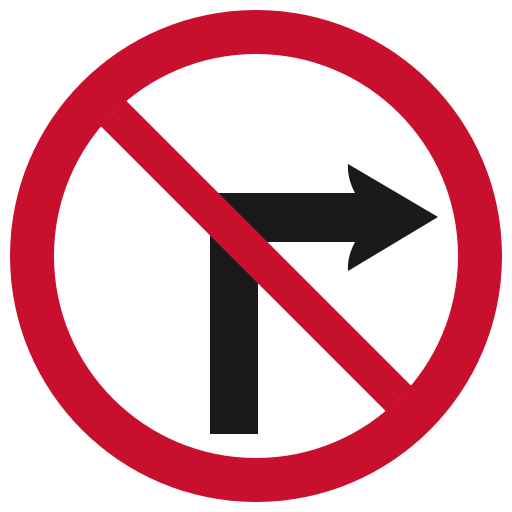
What does this sign mean?
No right turn.
Truck · Category C
Truck & Large Van theory test
Vans and trucks over 3,500 kg.
100
questions
120 min
to answer them
74 of 100
to pass (74%)
Learn the system, not just the pictures. Once you know what each shape and colour means you can read a sign you have never seen before — which is exactly what the test is checking. 222 signs can appear on the category C test.
Amber diamond
Warning — a hazard ahead. Ireland uses a diamond, not the red triangle used across most of Europe and in the UK.
Orange diamond
Warning at roadworks. Deliberately distinct from the permanent amber ones, so a temporary hazard stands out.
Red circle
Prohibition — you must not.
Blue circle
Mandatory — you must.
Octagon
Stop, and nothing else uses this shape.
Inverted triangle
Yield.
Blue rectangle
Information.
Red prohibits, blue compels. Getting that pair straight answers a large share of the sign questions on the test.
The colour tells you what class of road you are being sent onto — and therefore what its default speed limit is.
Blue
Motorway
Green
National roads (N-numbers)
White with black text
Regional and local roads
Brown
Tourist and heritage attractions
1 of 10
Each sign as it stands on the road, and four meanings. Pick one — the meaning is what the test asks for, not the picture, and the wrong answers are real signs of the same kind.
No right turn.
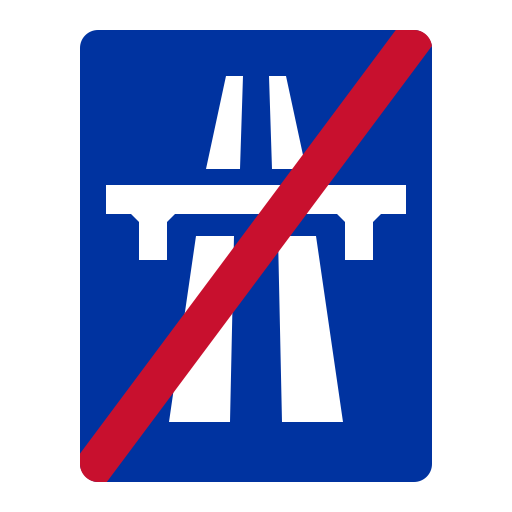
End of motorway.
Slower traffic, pedestrians, cyclists and learner drivers may all appear from this point, and the limit drops even though the road may look unchanged.

Barrier board.
Red and white boards mark the edge of a closure. Keep to the open side and follow any detour signs.
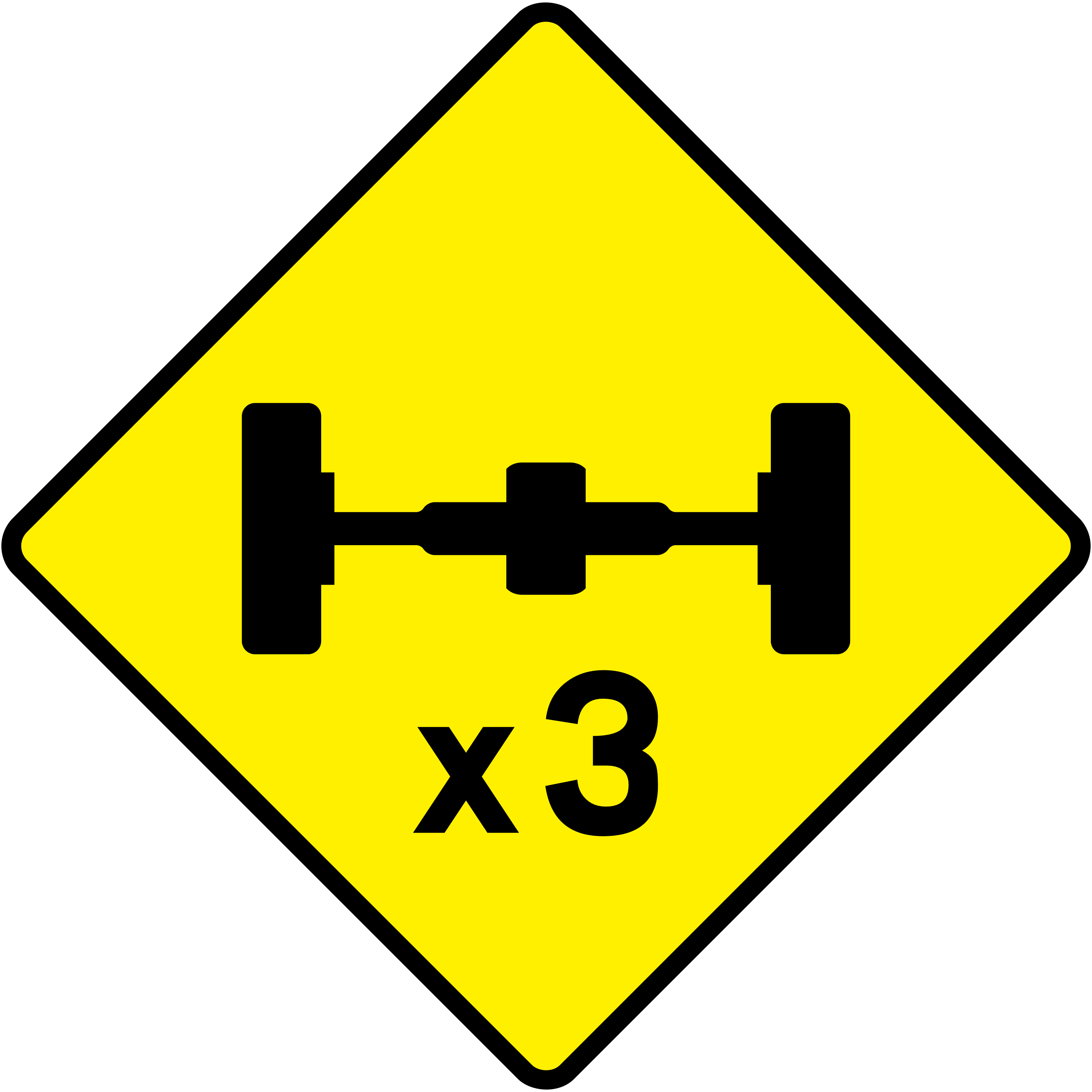
Axle restriction ahead.
This is the warning, not the prohibition itself. It is placed early so a goods vehicle has somewhere to turn before it meets the red-circle sign.

Hospital.
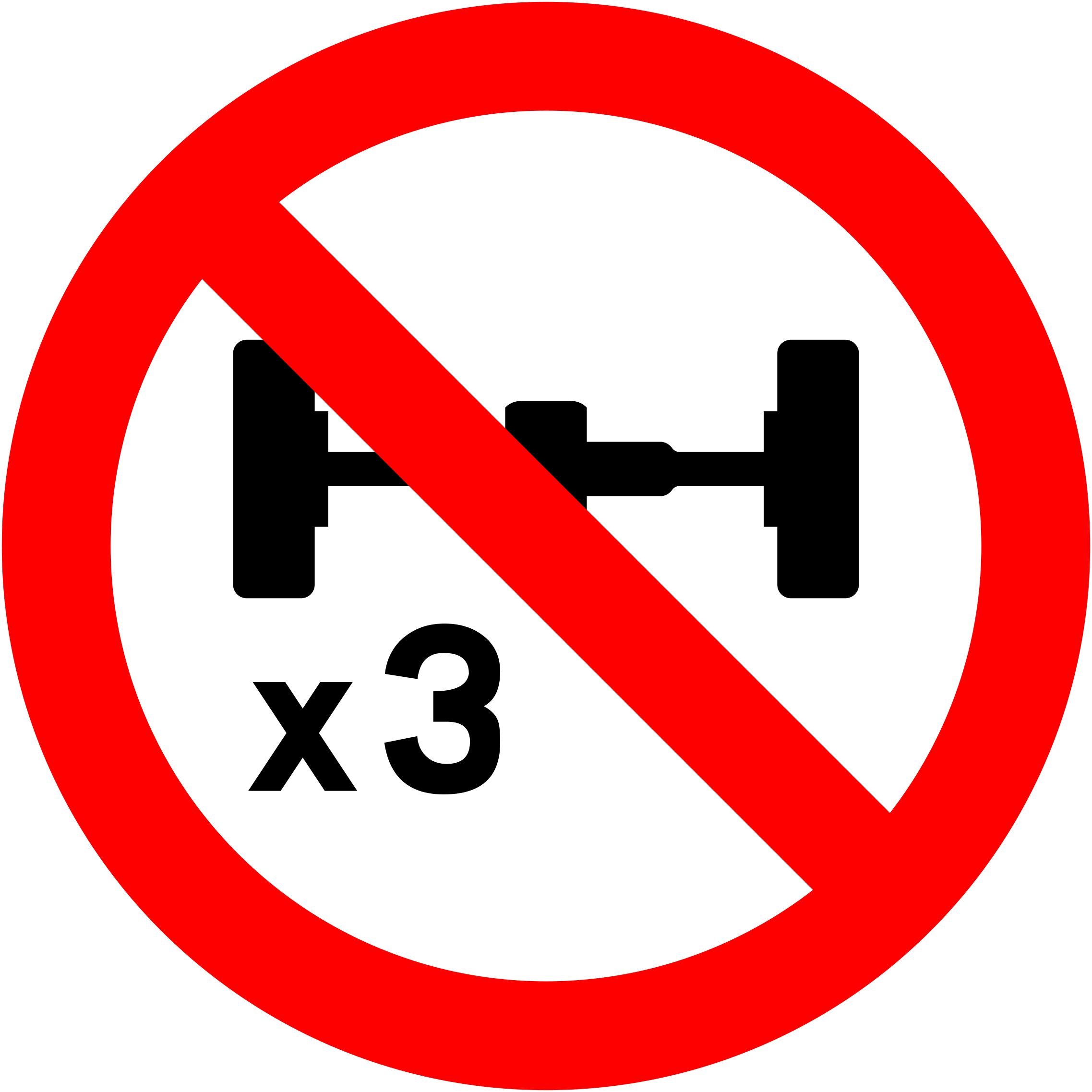
No vehicles with three or more axles.
It counts axles rather than weight, so a lightly loaded three-axle vehicle is caught by it just the same.
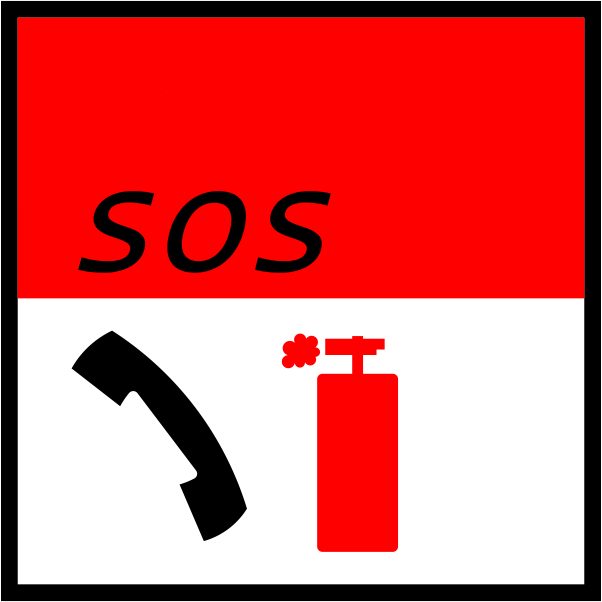
Emergency station.
Found in tunnels and on motorways. The telephone connects straight to the control room and tells them exactly where you are, which a mobile call cannot.
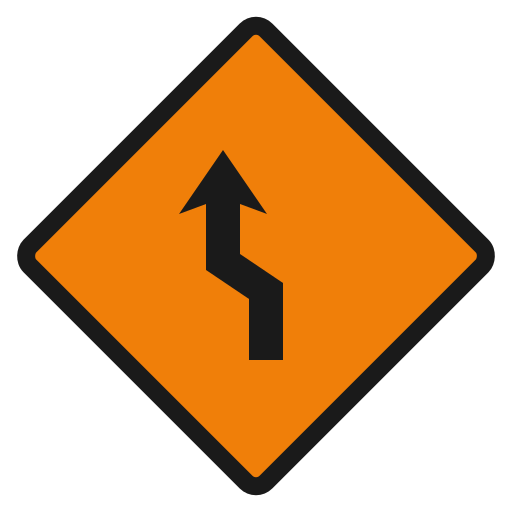
Move to the left.
Used where the works occupy the right-hand side. Follow the arrow and hold your line through the shift.
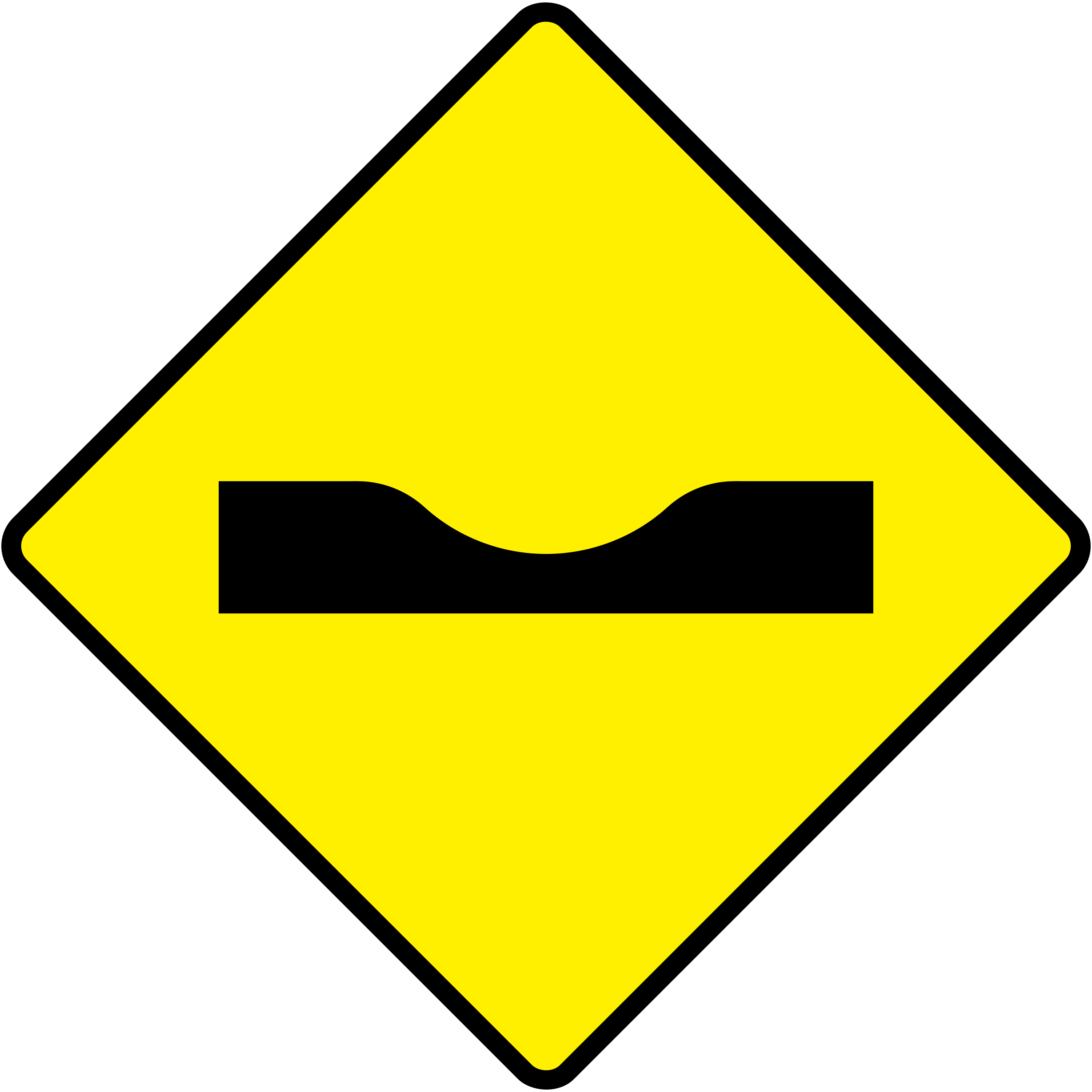
Road depression.
A depression fills with water and then hides its own depth. Slow before you reach it rather than braking once you are in it.
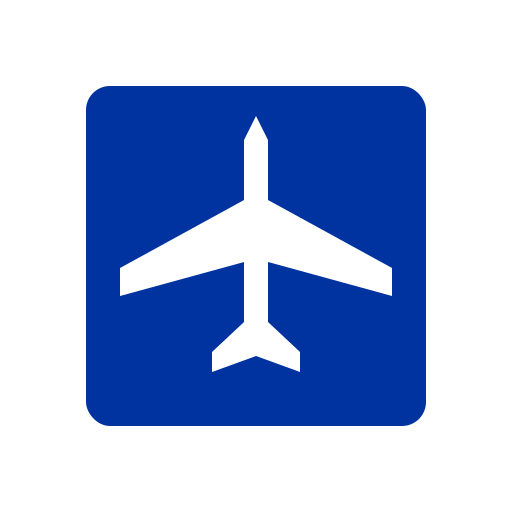
Airport.
The aeroplane symbol is used across Europe, so it reads the same to a visitor with no English or Irish.
The signs are drawn to the Traffic Signs Manual's designs, by us or from public-domain drawings on Wikimedia Commons; none is official artwork.The meanings are the book's; the wording of a question is ours.
In the app
Reading a list of signs is not the same as knowing them. The app makes you produce the meaning, which is what the test asks for.

Tap a sign for what it means and where you meet it — the meaning is the thing the test asks for, not the picture.
Set out in the groups the Irish sign guides use, and filtered by kind: warning, roadworks, regulatory, information, motorway
Search by name when you have seen one on the road and want it now
Works with no signal, which is most of the useful moments

Recognising a sign and producing its meaning are different skills, and only one of them is tested.
Four meanings, one sign, drawn from the group you are looking at
Never asks you to tell apart two signs that are drawn the same
A score at the end and another ten whenever you want them

The old way, because it works: sign, guess, turn it over, next.
The full list or just the group you picked
Swipe or use the arrows — one hand, one thumb
Good for the five minutes before you go in
One group of signs is free; the whole library comes with the unlock.