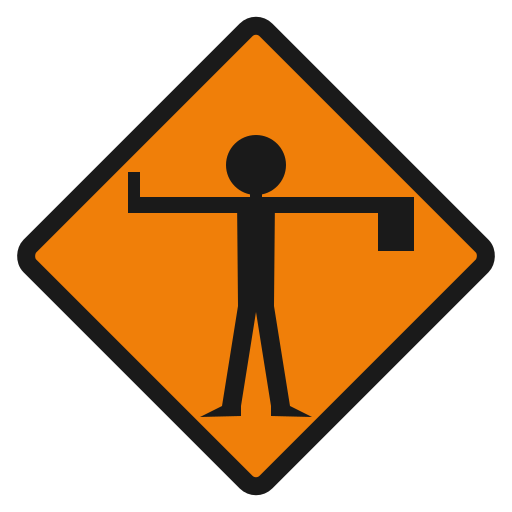
What does this sign mean?
Traffic control ahead.
A Garda or an authorised traffic controller overrides every other sign and signal.
Road signs
Learn the system, not just the pictures. Once you know what each shape and colour means you can read a sign you have never seen before — which is exactly what the theory test is checking, whichever licence you are going for.
Amber diamond
Warning — a hazard ahead. Ireland uses a diamond, not the red triangle used across most of Europe and in the UK.
Orange diamond
Warning at roadworks. Deliberately distinct from the permanent amber ones, so a temporary hazard stands out.
Red circle
Prohibition — you must not.
Blue circle
Mandatory — you must.
Octagon
Stop, and nothing else uses this shape.
Inverted triangle
Yield.
Blue rectangle
Information.
Red prohibits, blue compels. Getting that pair straight answers a large share of the sign questions on the test.
The colour tells you what class of road you are being sent onto — and therefore what its default speed limit is.
Blue
Motorway
Green
National roads (N-numbers)
White with black text
Regional and local roads
Brown
Tourist and heritage attractions
1 of 10
Each sign as it stands on the road, and four meanings. Pick one — the meaning is what the test asks for, not the picture, and the wrong answers are real signs of the same kind.
Traffic control ahead.
A Garda or an authorised traffic controller overrides every other sign and signal.
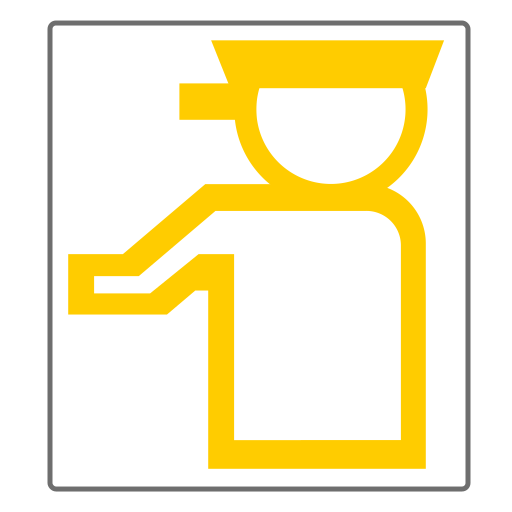
Manual toll booth.
Take this lane to pay by cash or card. The coin-basket and electronic tag lanes are signed separately.
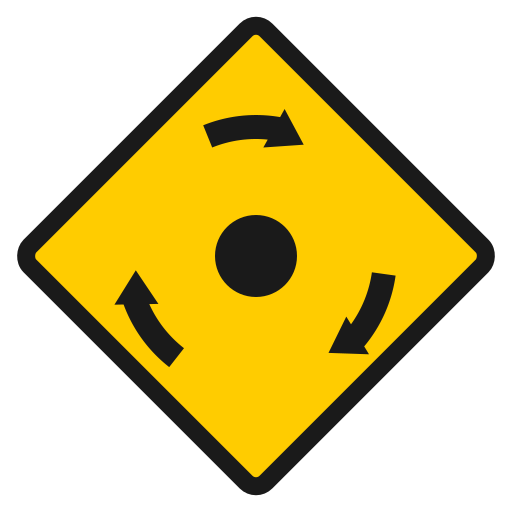
Mini-roundabout ahead.
The island may be no more than a painted circle, and the whole junction can be crossed in a couple of seconds, so signal early and drive round the island rather than over it.
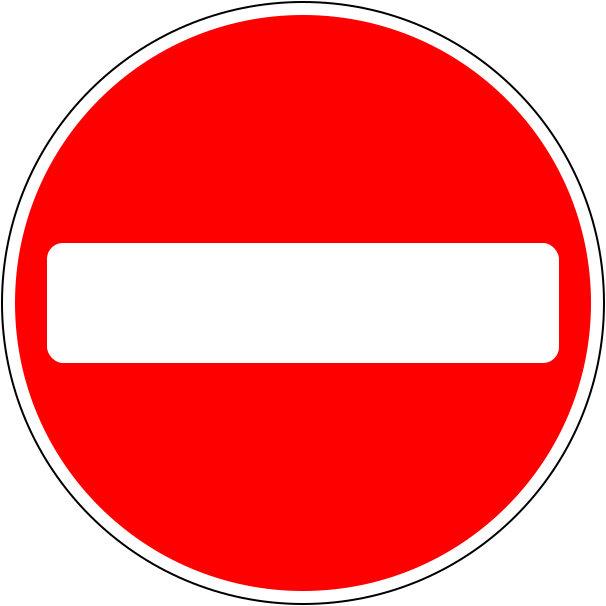
No entry.
A red circle with a white horizontal bar. It commonly marks the wrong end of a one-way street.
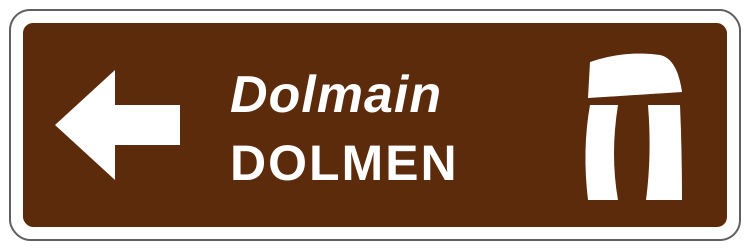
Tourist attraction.
Brown is reserved for tourism — castles, beaches, national parks.
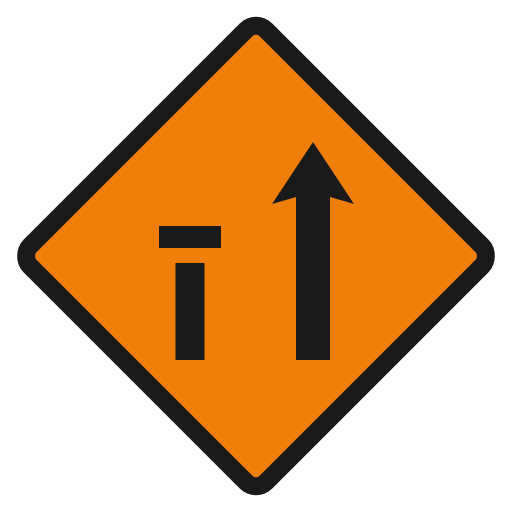
Left lane closed.
Merge in turn at the closure rather than early. Both lanes are meant to be used right up to the taper, which is faster for everyone.
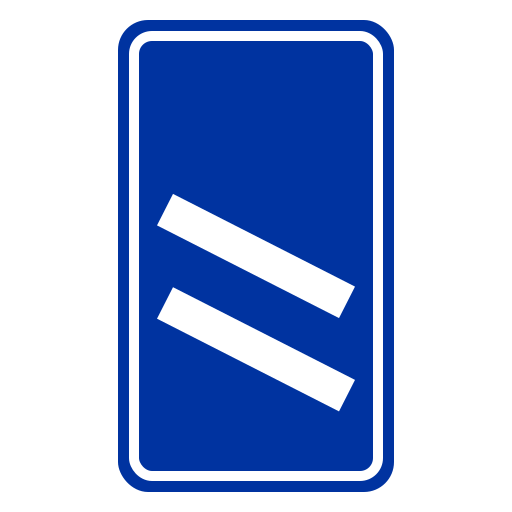
Countdown marker — 200 m.
Two bars. The bars count down as you approach: three, two, one.
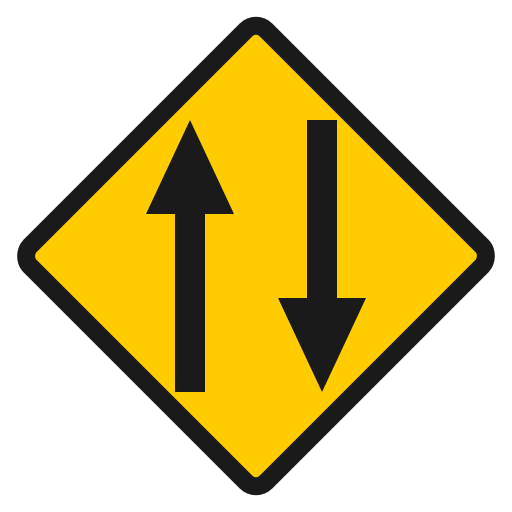
Two-way traffic ahead.
Common where a dual carriageway ends — a genuinely dangerous transition if it takes you by surprise.
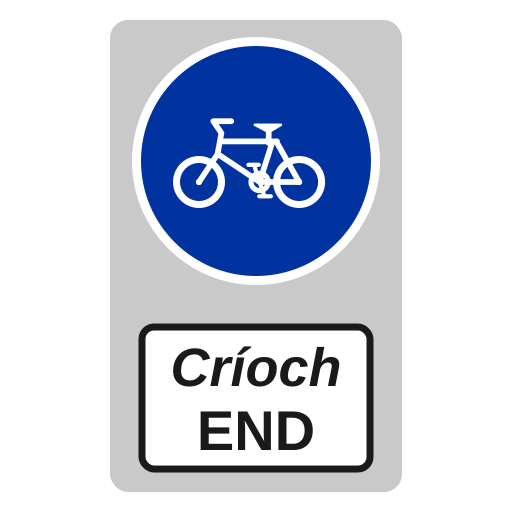
End of cycle track.
Riders rejoin the general traffic lane at this point, so expect a bicycle to move out into your path just after the sign.

Turn headlights on.
Used at tunnels and on stretches with poor visibility. Dipped beam, not sidelights, and not main beam where it would dazzle.
The signs are drawn to the Traffic Signs Manual's designs, by us or from public-domain drawings on Wikimedia Commons; none is official artwork.The meanings are the book's; the wording of a question is ours.
In the app
Reading a list of signs is not the same as knowing them. The app makes you produce the meaning, which is what the test asks for.

Tap a sign for what it means and where you meet it — the meaning is the thing the test asks for, not the picture.
Set out in the groups the Irish sign guides use, and filtered by kind: warning, roadworks, regulatory, information, motorway
Search by name when you have seen one on the road and want it now
Works with no signal, which is most of the useful moments

Recognising a sign and producing its meaning are different skills, and only one of them is tested.
Four meanings, one sign, drawn from the group you are looking at
Never asks you to tell apart two signs that are drawn the same
A score at the end and another ten whenever you want them

The old way, because it works: sign, guess, turn it over, next.
The full list or just the group you picked
Swipe or use the arrows — one hand, one thumb
Good for the five minutes before you go in
One group of signs is free; the whole library comes with the unlock.